

Long-distance trucks
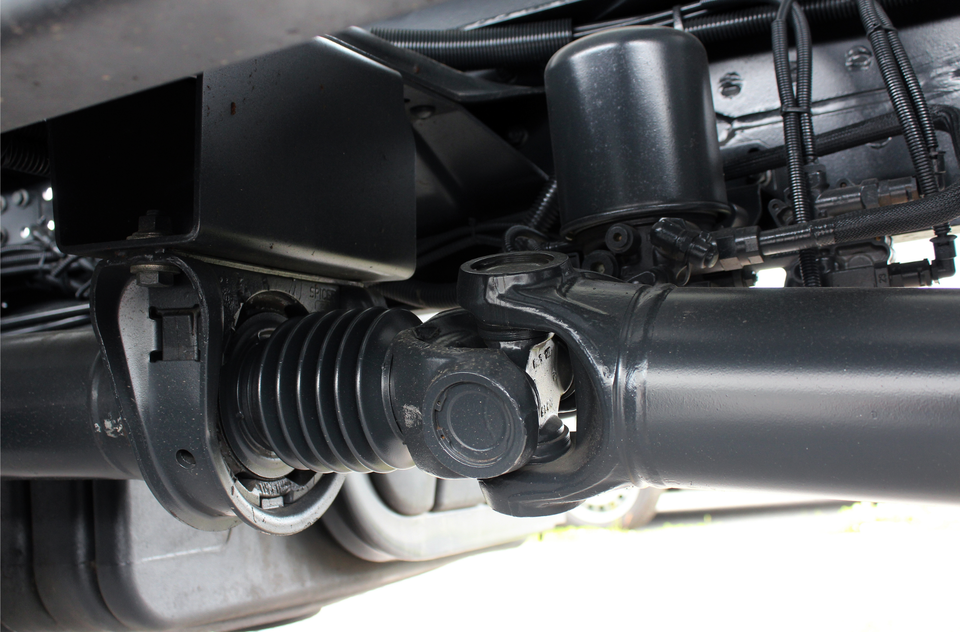
As long as the truck stays moving, the driveshaft goes largely unnoticed. Nowadays driveshafts have a comparatively long service life, whereas regular lubrication used to be necessary, and was often ignored, modern sealing systems have significantly increased the service life of universal joints and subsequently driveshafts as well. Driveshafts for long distance transport now reach up to one million kilometres before they are ready for a specialist overhaul. “Regardless of whether the customer opts for a complete shaft or reconditioning, EDS – ALL DRIVESHAFT brand driveshafts and components deliver uncompromising quality for a high-performance powertrain,” says Robert Sanchez, technical manager at Welte Cardan-Service.
The improved seals on the bearing bushings, which sit on the pins of the universal joints, are key to increasing mileage. The development from simple rubber grommets to double and triple seal solutions with special dust caps prevents both lubricant leakage and the ingress of dirt and moisture into the bearing. This means that most driveshafts in the on-road sector no longer require lubrication.
“The development of ‘service-free’ driveshafts filled with specialised grease was driven by the number of failures attributable to poor maintenance,” says Sanchez. The expert goes on to explain: “Today, regreaseable shafts are virtually non-existent in the on-road sector.
Omnibus and coaches
Buses also place very special demands on the driveshaft. Although they are used purely for on-road or highway operation, adapting them for passenger transport poses particular challenges. For example, the acoustic and thermal insulation that protects passengers from waste heat and noise from the engine and transmission causes increased temperatures in the drive train. While this can be easily compensated for in actively cooled components with cooling systems, the experts at Welte Cardan-Service GmbH have noticed increased wear on driveshafts in buses. The reason for this is thermal stress, which causes the seals of the universal joints and the length compensation to become prematurely brittle. This leads to lubricant leakage, joints and gear teeth running dry and wearing out much faster than in an open truck chassis, despite heavy duty grease being applied during manufacture.
Off-road applications
The situation is different in the off-highway and off-road sectors. The drive train is often exposed to heavy, uneven loads, for example when starting under maximum load in off-road conditions as well as strong rolling movements of the axles resulting in large angle changes both of which in turn increase the load that the length compensation and universal joints have to compensate for.
Driving through harsh environments with lots of dirt, mud, and water also takes a noticeable toll on the driveshaft and centre bearing. It is difficult to quantify the service life of the shaft for off-highway vehicles, but it is significantly shorter than vehicles limited to on-road traffic – it is not unusual for the drive shaft of a truck operating in a mine/gravel pit to need replacement after only 250,000/300,000 kilometres.
Partially regreaseable
Another difference in the off-road sector, is the fact that construction and agricultural machinery continue to use driveshafts that can be relubricated. Here, operators or workshops should use a grease gun once a month to relubricate the universal joints with high-quality lithium-soaped lubricating grease in accordance with the KP-2 standard to ensure a longer service life.
The reason for this is that temperature changes in the bearing bush can cause physical negative pressure. This can literally suck water and dirt particles into the bearing. Regular relubrication helps to flush out any contaminants that have penetrated and reliably protect the bearing points.